
Antibody arrays enable multiplex protein analysis by detecting many related biomarkers in parallel from a single sample. Instead of measuring one analyte at a time, researchers can use antibody arrays to profile cytokines, chemokines, growth factors, and other pathway-associated proteins in a single experiment.
This article explains the principle, workflow, and application of antibody arrays. It focuses on RayBio antibody arrays available from antibodies-online, which we offer through our partnership with RayBiotech. The structured product overview makes it easier to compare research areas, species reactivity, detection methods, sample requirements, and target panels when selecting an array for multiplex protein analysis.
What Are Antibody Arrays?
Antibody arrays are multiplex immunoassays that detect multiple proteins in parallel from the same biological sample. In an antibody array, capture antibodies are immobilized at defined positions on a membrane, glass slide, or multi-well array surface. When a sample is applied, target proteins bind to their corresponding antibodies and are detected by chemiluminescent, fluorescent, or colorimetric readout systems.
Because many analytes can be measured at once, antibody arrays are particularly useful for pathway-focused protein profiling, biomarker screening, and comparing protein expression patterns between sample groups. They are often used to investigate cytokines, chemokines, growth factors, angiogenesis markers, immune-response proteins, phosphorylation targets, and disease-associated biomarker panels before individual targets are validated with single-analyte assays such as ELISA.
Spotlight: RayBio Human Cytokine Array C5

Human Cytokine Array C5 (ABIN625562) is a RayBio C-Series membrane array for semi-quantitative profiling of human cytokines, chemokines, growth factors, and related immune-response mediators from liquid biological samples.
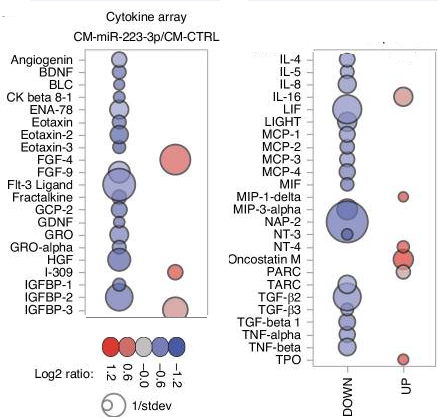
In “Unveiling the origin and functions of diagnostic circulating microRNAs in lung cancer,” Colangelo et al. investigated where a 13-circulating-miRNA diagnostic signature for lung cancer originates and whether selected miRNAs contribute functionally to tumor and immune phenotypes. The authors analyzed lung cancer and hematopoietic cell lines together with serum profiles from 975 high-risk individuals, then focused on miR-29a-3p and miR-223-3p. In the functional part of the study, cytokine-array profiling was used to assess how miR-223-3p affects inflammatory signaling. The array helped connect miR-223-3p modulation with altered cytokine expression, supporting the conclusion that this circulating miRNA is not only a biomarker candidate but may also contribute to lung cancer pathogenesis and immune modulation. [PMID]
Human
Chemiluminescent
80
Membrane
Semi-quantitative
1 mL
The target panel includes inflammatory cytokines and chemokines such as IL-1α, IL-1β, IL-6, IL-8, IL-10, IFN-γ, TNF-α, MCP proteins, MIP proteins, RANTES, IP-10, and multiple growth factors including VEGF-A, EGF, HGF, FGF family members, and TGF-β isoforms.
How Antibody Arrays Work
Arrays are available in different formats, including membrane-based arrays, glass-slide arrays, quantitative multiplex ELISA arrays, and label-based profiling arrays. Although assay details vary by product family, the general workflow follows the same principle: multiple capture spots or binding regions are arranged on an array surface, allowing many targets to be assessed in parallel from the same sample.
- Array and sample preparation: The sample is prepared according to the product protocol and applied to the array surface. Depending on the array type, target proteins may bind directly to immobilized capture antibodies, or sample proteins may first be labeled before incubation.
- Incubation and target binding: Proteins or other target molecules in the sample interact with their corresponding capture spots on the membrane or glass-slide array. Each spot represents a defined analyte, antibody, or binding reagent.
- Washing: Unbound sample components are removed by washing. This reduces background signal and improves the specificity of the readout.
- Detection: Bound targets are visualized using the detection chemistry specified for the array format. This may involve chemiluminescent detection, fluorescent detection, biotin-streptavidin systems, labeled detection antibodies, or direct label-based sample detection.
- Signal readout and analysis: The signal intensity at each spot is measured using the appropriate imaging system. Chemiluminescent membrane arrays are commonly used for relative protein-expression comparison, while fluorescent glass-slide and Quantibody arrays support higher-throughput readout. Quantitative arrays use standards to calculate analyte concentrations; semi-quantitative arrays are typically used to compare relative signal intensities or fold changes between samples.
Because the workflow depends on the selected array format, researchers should check the individual product protocol for sample volume, compatible sample types, incubation conditions, detection method, imaging requirements, and whether the assay provides quantitative or semi-quantitative data.
How to Choose an Antibody Array
The right antibody array depends on the biological question, the available sample material, and the type of data required. Before selecting a product, researchers should define whether the experiment is intended for broad screening, pathway-focused comparison, or quantitative measurement of selected proteins.
- Start with the research area: Choose an array that matches the biological pathway or disease context of the experiment, such as cytokines, chemokines, angiogenesis, apoptosis, inflammation, phosphorylation, cancer, or receptor signalling.
- Check species reactivity: Select an array validated for the species of the sample. Many arrays are designed for human or mouse samples, but reactivity should always be confirmed on the individual product page.
- Match the array to the sample type and volume: Antibody arrays can be used with different biological sample types, depending on the product format. Check whether the array is suitable for serum, plasma, cell-culture supernatant, cell lysate, tissue lysate, or other sample matrices, and confirm the required sample volume before ordering.
- Decide between quantitative and semi-quantitative data: Quantitative arrays are used when analyte concentrations are required and typically include standards for calibration. Semi-quantitative arrays are more suitable for comparing relative signal intensities, expression patterns, or fold changes between experimental groups.
- Consider the detection method and available equipment: Some arrays use chemiluminescent detection, while others use fluorescent readout. The selected format should match the imaging system available in the laboratory, such as a chemiluminescence imager or laser slide scanner.
RayBio arrays are available in several product families. Quantibody and Q-Series arrays are designed for quantitative multiplex measurement using standards, whereas many C-Series, G-Series, GS-Series, and L-Series arrays are used for semi-quantitative screening or relative comparison of protein-expression patterns. The series overview below helps distinguish the main formats before selecting an individual product.
| Array Type | Purpose | Key Distinction |
|---|---|---|
| C-Series Arrays | Pathway-focused screening and relative comparison of protein expression. | Membrane-based arrays with chemiluminescent detection; suitable for comparing signal patterns between sample groups. |
| G-Series / GS Arrays | Multiplex protein profiling with fluorescent readout. | Glass-slide format; useful when a fluorescence scanner is available and multiple samples or targets need to be profiled in parallel. |
| Quantibody / Q-Series Arrays | Quantitative multiplex measurement of selected proteins. | Uses standards to calculate analyte concentrations; appropriate when concentration values are required rather than relative signal only. |
| L-Series Arrays | Broad profiling of labeled sample proteins or specialized target classes. | Label-based workflow; useful for exploratory profiling and applications such as glycosylation-related analysis. |
For exploratory studies, a broader pathway-focused array can help identify candidate biomarkers for follow-up. For validation-oriented studies, a focused quantitative array or individual ELISA assays may be more appropriate. The product table below can be used to compare all arrays by research area, ABIN, reactivity, detection method, sample volume, and number of targets.
RayBio Antibody Arrays Available from antibodies-online
| Research Area | ABIN | Name | Reactivity | Detection Method | Sample Volume | No. Targets |
|---|---|---|---|---|---|---|
| ABIN4955950 | Human Adhesion Molecule Array GS1 | Human | Fluorometric | 100 µL | 17 | |
| ABIN4956042 | Human Adhesion Molecule Array Q1 (3) | Human | Fluorometric | 100 µL | 17 | |
| ABIN625515 | Human Angiogenesis Array C1 | Human | Chemiluminescent | 1 mL | 20 | |
| ABIN625516 | Human Angiogenesis Array C1 | Human | Chemiluminescent | 1 mL | 20 | |
| ABIN625513 | Human Angiogenesis Array C1000 | Human | Chemiluminescent | 1 mL | 43 | |
| ABIN625514 | Human Angiogenesis Array C1000 | Human | Chemiluminescent | 1 mL | 43 | |
| ABIN625517 | Human Angiogenesis Array C2 | Human | Chemiluminescent | 1 mL | 23 | |
| ABIN625518 | Human Angiogenesis Array C2 | Human | Chemiluminescent | 1 mL | 23 | |
| ABIN625521 | Human Angiogenesis Array G1 | Human | Fluorometric | 100 µL | 20 | |
| ABIN625522 | Human Angiogenesis Array G1 | Human | Fluorometric | 100 µL | 20 | |
| ABIN625519 | Human Angiogenesis Array G1000 | Human | Fluorometric | 100 µL | 43 | |
| ABIN625520 | Human Angiogenesis Array G1000 | Human | Fluorometric | 100 µL | 43 | |
| ABIN625523 | Human Angiogenesis Array G2 | Human | Fluorometric | 100 µL | 23 | |
| ABIN625524 | Human Angiogenesis Array G2 | Human | Fluorometric | 100 µL | 23 | |
| ABIN4955929 | Human Angiogenesis Array GS1 | Human | Fluorometric | 100 µL | 10 | |
| ABIN4955928 | Human Angiogenesis Array GS1000 | Human | Fluorometric | 100 µL | 60 | |
| ABIN4955930 | Human Angiogenesis Array GS2 | Human | Fluorometric | 100 µL | 30 | |
| ABIN4955931 | Human Angiogenesis Array GS3 | Human | Fluorometric | 100 µL | 30 | |
| ABIN625700 | Human Angiogenesis Array Q1 | Human | Fluorometric | 100 µL | 10 | |
| ABIN625701 | Human Angiogenesis Array Q1 | Human | Fluorometric | 100 µL | 10 | |
| ABIN625702 | Human Angiogenesis Array Q1 | Human | Fluorometric | 100 µL | 10 | |
| ABIN4956022 | Human Angiogenesis Array Q1000 | Human | Fluorometric | 100 µL | 60 | |
| ABIN625703 | Human Angiogenesis Array Q2 | Human | Fluorometric | 100 µL | 30 | |
| ABIN625704 | Human Angiogenesis Array Q2 | Human | Fluorometric | 100 µL | 30 | |
| ABIN625705 | Human Angiogenesis Array Q2 | Human | Fluorometric | 100 µL | 30 | |
| ABIN625706 | Human Angiogenesis Array Q3 | Human | Fluorometric | 100 µL | 30 | |
| ABIN625707 | Human Angiogenesis Array Q3 | Human | Fluorometric | 100 µL | 30 | |
| ABIN625708 | Human Angiogenesis Array Q3 | Human | Fluorometric | 100 µL | 30 | |
| ABIN625619 | Mouse Angiogenesis Array C1 | Mouse | Chemiluminescent | 1 mL | 24 | |
| ABIN625620 | Mouse Angiogenesis Array C1 | Mouse | Chemiluminescent | 1 mL | 24 | |
| ABIN625621 | Mouse Angiogenesis Array G1 | Mouse | Fluorometric | 100 µL | 24 | |
| ABIN625622 | Mouse Angiogenesis Array G1 | Mouse | Fluorometric | 100 µL | 24 | |
| ABIN625525 | Human Apoptosis Array C1 | Human | Chemiluminescent | 1 mL | 43 | |
| ABIN625526 | Human Apoptosis Array C1 | Human | Chemiluminescent | 1 mL | 43 | |
| ABIN625527 | Human Apoptosis Array C1 | Human | Chemiluminescent | 1 mL | 43 | |
| ABIN625528 | Human Apoptosis Array G1 | Human | Fluorometric | 100 µL | 43 | |
| ABIN625529 | Human Apoptosis Array G1 | Human | Fluorometric | 100 µL | 43 | |
| ABIN4955884 | Human Apoptosis Signaling Array C1 | Human | Chemiluminescent | 1 mL | 18 | |
| ABIN625530 | Human Atherosclerosis Array C1 | Human | Chemiluminescent | 1 mL | 20 | |
| ABIN625531 | Human Atherosclerosis Array C1 | Human | Chemiluminescent | 1 mL | 20 | |
| ABIN625623 | Mouse Atherosclerosis Array C1 | Mouse | Chemiluminescent | 1 mL | 22 | |
| ABIN625624 | Mouse Atherosclerosis Array C1 | Mouse | Chemiluminescent | 1 mL | 22 | |
| ABIN4955933 | Human Bone Metabolism Array GS1 | Human | Fluorometric | 100 µL | 31 | |
| ABIN4955932 | Human Bone Metabolism Array GS1000 | Human | Fluorometric | 100 µL | 41 | |
| ABIN4955934 | Human Bone Metabolism Array GS2 | Human | Fluorometric | 100 µL | 10 | |
| ABIN4956024 | Human Bone Metabolism Array Q1 | Human | Fluorometric | 100 µL | 31 | |
| ABIN4956023 | Human Bone Metabolism Array Q1000 | Human | Fluorometric | 100 µL | 41 | |
| ABIN4956025 | Human Bone Metabolism Array Q2 | Human | Fluorometric | 100 µL | 10 | |
| ABIN4955893 | Human Cancer Discovery Array C1 | Human | Chemiluminescent | 1 mL | 10 | |
| ABIN4955894 | Human Cancer Discovery Array C2 | Human | Chemiluminescent | 1 mL | 20 | |
| ABIN4955895 | Human Cancer Discovery Array C3 | Human | Chemiluminescent | 1 mL | 30 | |
| ABIN4955967 | Human Gastric Cancer Biomarker Array GS1 | Human | Fluorometric | 100 µL | 5 | |
| ABIN4956063 | Human Gastric Cancer Biomarker Array Q1 | Human | Fluorometric | 100 µL | 5 | |
| ABIN4956064 | Human Immune Checkpoint Molecule Array 1 | Human | Fluorometric | 100 µL | 10 | |
| ABIN4955971 | Human Immune Response Array GS1 | Human | Fluorometric | 100 µL | 40 | |
| ABIN4956066 | Human Immune Response Array Q1 | Human | Fluorometric | 100 µL | 40 | |
| ABIN4955908 | Human T Cell Response Array C1 | Human | Chemiluminescent | 1 mL | 10 | |
| ABIN4955909 | Human T Cell Response Array C2 | Human | Chemiluminescent | 1 mL | 20 | |
| ABIN625540 | Human Chemokine Array C1 | Human | Chemiluminescent | 1 mL | 38 | |
| ABIN625541 | Human Chemokine Array C1 | Human | Chemiluminescent | 1 mL | 38 | |
| ABIN4955896 | Human Chemokine Array G1 | Human | Fluorometric | 100 µL | 38 | |
| ABIN4955951 | Human Chemokine Array GS1 | Human | Fluorometric | 100 µL | 40 | |
| ABIN625715 | Human Chemokine Array Q1 | Human | Fluorometric | 100 µL | 40 | |
| ABIN625716 | Human Chemokine Array Q1 | Human | Fluorometric | 100 µL | 40 | |
| ABIN625717 | Human Chemokine Array Q1 | Human | Fluorometric | 100 µL | 40 | |
| ABIN4955910 | Mouse Chemokine Array C1 | Mouse | Chemiluminescent | 1 mL | 25 | |
| ABIN4955989 | Mouse Chemokine Array GS1 | Mouse | Fluorometric | 100 µL | 25 | |
| ABIN625762 | Mouse Chemokine Array Q1 | Mouse | Fluorometric | 100 µL | 25 | |
| ABIN625763 | Mouse Chemokine Array Q1 | Mouse | Fluorometric | 100 µL | 25 | |
| ABIN625764 | Mouse Chemokine Array Q1 | Mouse | Fluorometric | 100 µL | 25 | |
| ABIN4955919 | Bovine Cytokine Array GS1 | Cow | Fluorometric | 100 µL | 10 | |
| ABIN4955920 | Bovine Cytokine Array GS2 | Cow | Fluorometric | 100 µL | 10 | |
| ABIN4956015 | Bovine Cytokine Array Q1 | Cow | Fluorometric | 100 µL | 10 | |
| ABIN4956016 | Bovine Cytokine Array Q2 | Cow | Fluorometric | 100 µL | 10 | |
| ABIN4955921 | Canine Cytokine Array GS1 | Dog | Fluorometric | 100 µL | 10 | |
| ABIN4955922 | Canine Cytokine Array GS2 | Dog | Fluorometric | 100 µL | 10 | |
| ABIN4956017 | Canine Cytokine Array Q1 (3) | Dog | Fluorometric | 100 µL | 10 | |
| ABIN4956018 | Canine Cytokine Array Q2 | Dog | Fluorometric | 100 µL | 10 | |
| ABIN4955923 | Equine Cytokine Array GS1 | Fluorometric | 100 µL | 10 | ||
| ABIN4956019 | Equine Cytokine Array Q1 | Fluorometric | 100 µL | 10 | ||
| ABIN4955924 | Feline Cytokine Array GS1 | Cat | Fluorometric | 100 µL | 10 | |
| ABIN4956020 | Feline Cytokine Array Q1 | Cat | Fluorometric | 100 µL | 10 | |
| ABIN625575 | Human Cytokine Antibody Array G1000 | Human | Fluorometric | 50-100 µL | 120 | |
| ABIN625576 | Human Cytokine Antibody Array G1000 | Human | Fluorometric | 50-100 µL | 120 | |
| ABIN625548 | Human Cytokine Array C1 | Human | Chemiluminescent | 1 mL | 23 | |
| ABIN625549 | Human Cytokine Array C1 | Human | Chemiluminescent | 1 mL | 23 | |
| ABIN625550 | Human Cytokine Array C1 | Human | Chemiluminescent | 1 mL | 23 | |
| ABIN625545 | Human Cytokine Array C10 | Human | Chemiluminescent | 1 mL | 49 | |
| ABIN625546 | Human Cytokine Array C10 | Human | Chemiluminescent | 1 mL | 49 | |
| ABIN625547 | Human Cytokine Array C10 | Human | Chemiluminescent | 1 mL | 49 | |
| ABIN625542 | Human Cytokine Array C1000 | Human | Chemiluminescent | 1 mL | 120 | |
| ABIN625543 | Human Cytokine Array C1000 | Human | Chemiluminescent | 1 mL | 120 | |
| ABIN625544 | Human Cytokine Array C1000 | Human | Chemiluminescent | 1 mL | 120 | |
| ABIN4955897 | Human Cytokine Array C11 | Human | Chemiluminescent | 1 mL | 37 | |
| ABIN4955898 | Human Cytokine Array C12 | Human | Chemiluminescent | 1 mL | 32 | |
| ABIN625551 | Human Cytokine Array C2000 | Human | Chemiluminescent | 1 mL | 174 | |
| ABIN625552 | Human Cytokine Array C2000 | Human | Chemiluminescent | 1 mL | 174 | |
| ABIN625553 | Human Cytokine Array C2000 | Human | Chemiluminescent | 1 mL | 174 | |
| ABIN625554 | Human Cytokine Array C3 | Human | Chemiluminescent | 1 mL | 42 | |
| ABIN625555 | Human Cytokine Array C3 | Human | Chemiluminescent | 1 mL | 42 | |
| ABIN625558 | Human Cytokine Array C4 | Human | Chemiluminescent | 1 mL | 36 | |
| ABIN625559 | Human Cytokine Array C4 | Human | Chemiluminescent | 1 mL | 36 | |
| ABIN625556 | Human Cytokine Array C4000 | Human | Chemiluminescent | 1 mL | 274 | |
| ABIN625557 | Human Cytokine Array C4000 | Human | Chemiluminescent | 1 mL | 274 | |
| ABIN625560 | Human Cytokine Array C5 | Human | Chemiluminescent | 1 mL | 80 | |
| ABIN625561 | Human Cytokine Array C5 | Human | Chemiluminescent | 1 mL | 80 | |
| ABIN625562 | Human Cytokine Array C5 | Human | Chemiluminescent | 1 mL | 80 | |
| ABIN625563 | Human Cytokine Array C6 | Human | Chemiluminescent | 1 mL | 60 | |
| ABIN625564 | Human Cytokine Array C6 | Human | Chemiluminescent | 1 mL | 60 | |
| ABIN625565 | Human Cytokine Array C6 | Human | Chemiluminescent | 1 mL | 60 | |
| ABIN625566 | Human Cytokine Array C7 | Human | Chemiluminescent | 1 mL | 60 | |
| ABIN625567 | Human Cytokine Array C7 | Human | Chemiluminescent | 1 mL | 60 | |
| ABIN625568 | Human Cytokine Array C7 | Human | Chemiluminescent | 1 mL | 60 | |
| ABIN625569 | Human Cytokine Array C8 | Human | Chemiluminescent | 1 mL | 54 | |
| ABIN625570 | Human Cytokine Array C8 | Human | Chemiluminescent | 1 mL | 54 | |
| ABIN625571 | Human Cytokine Array C8 | Human | Chemiluminescent | 1 mL | 54 | |
| ABIN625572 | Human Cytokine Array C9 | Human | Chemiluminescent | 1 mL | 51 | |
| ABIN625573 | Human Cytokine Array C9 | Human | Chemiluminescent | 1 mL | 51 | |
| ABIN625574 | Human Cytokine Array C9 | Human | Chemiluminescent | 1 mL | 51 | |
| ABIN625577 | Human Cytokine Array G10 | Human | Fluorometric | 100 µL | 49 | |
| ABIN625578 | Human Cytokine Array G10 | Human | Fluorometric | 100 µL | 49 | |
| ABIN625579 | Human Cytokine Array G2000 | Human | Fluorometric | 100 µL | 174 | |
| ABIN625580 | Human Cytokine Array G2000 | Human | Fluorometric | 100 µL | 174 | |
| ABIN625581 | Human Cytokine Array G3 | Human | Fluorometric | 100 µL | 42 | |
| ABIN625582 | Human Cytokine Array G3 | Human | Fluorometric | 100 µL | 42 | |
| ABIN625583 | Human Cytokine Array G4000 | Human | Fluorometric | 100 µL | 273 | |
| ABIN625584 | Human Cytokine Array G4000 | Human | Fluorometric | 100 µL | 273 | |
| ABIN625585 | Human Cytokine Array G5 | Human | Fluorometric | 100 µL | 80 | |
| ABIN625586 | Human Cytokine Array G5 | Human | Fluorometric | 100 µL | 80 | |
| ABIN625587 | Human Cytokine Array G6 | Human | Fluorometric | 100 µL | 60 | |
| ABIN625588 | Human Cytokine Array G6 | Human | Fluorometric | 100 µL | 60 | |
| ABIN625589 | Human Cytokine Array G7 | Human | Fluorometric | 100 µL | 60 | |
| ABIN625590 | Human Cytokine Array G7 | Human | Fluorometric | 100 µL | 60 | |
| ABIN625591 | Human Cytokine Array G8 | Human | Fluorometric | 100 µL | 54 | |
| ABIN625592 | Human Cytokine Array G8 | Human | Fluorometric | 100 µL | 54 | |
| ABIN625593 | Human Cytokine Array G9 | Human | Fluorometric | 100 µL | 51 | |
| ABIN625594 | Human Cytokine Array G9 | Human | Fluorometric | 100 µL | 51 | |
| ABIN4955956 | Human Cytokine Array GS1 | Human | Fluorometric | 100 µL | 20 | |
| ABIN4955952 | Human Cytokine Array GS10 | Human | Fluorometric | 100 µL | 40 | |
| ABIN4955935 | Human Cytokine Array GS1000 | Human | Fluorometric | 100 µL | 80 | |
| ABIN4955953 | Human Cytokine Array GS11 | Human | Fluorometric | 100 µL | 40 | |
| ABIN4955954 | Human Cytokine Array GS12 | Human | Fluorometric | 100 µL | 40 | |
| ABIN4955955 | Human Cytokine Array GS13 | Human | Fluorometric | 100 µL | 40 | |
| ABIN4955957 | Human Cytokine Array GS14 | Human | Fluorometric | 100 µL | 40 | |
| ABIN4955958 | Human Cytokine Array GS15 | Human | Fluorometric | 100 µL | 40 | |
| ABIN4955936 | Human Cytokine Array GS2000 | Human | Fluorometric | 100 µL | 120 | |
| ABIN4955937 | Human Cytokine Array GS3000 | Human | Fluorometric | 100 µL | 160 | |
| ABIN4955960 | Human Cytokine Array GS4 | Human | Fluorometric | 100 µL | 40 | |
| ABIN4955938 | Human Cytokine Array GS4000 | Human | Fluorometric | 100 µL | 200 | |
| ABIN4955939 | Human Cytokine Array GS440 | Human | Fluorometric | 100 µL | 440 | |
| ABIN4955961 | Human Cytokine Array GS5 | Human | Fluorometric | 100 µL | 40 | |
| ABIN4955962 | Human Cytokine Array GS6 | Human | Fluorometric | 100 µL | 25 | |
| ABIN4955946 | Human Cytokine Array GS640 | Human | Fluorometric | 100 µL | 640 | |
| ABIN4955963 | Human Cytokine Array GS7 | Human | Fluorometric | 100 µL | 40 | |
| ABIN4955964 | Human Cytokine Array GS8 | Human | Fluorometric | 100 µL | 40 | |
| ABIN4955965 | Human Cytokine Array GS9 | Human | Fluorometric | 100 µL | 40 | |
| ABIN625718 | Human Cytokine Array Q1 | Human | Fluorometric | 100 µL | 20 | |
| ABIN625719 | Human Cytokine Array Q1 | Human | Fluorometric | 100 µL | 20 | |
| ABIN625720 | Human Cytokine Array Q1 | Human | Fluorometric | 100 µL | 20 | |
| ABIN4956043 | Human Cytokine Array Q10 | Human | Fluorometric | 100 µL | 40 | |
| ABIN4956026 | Human Cytokine Array Q1000 | Human | Fluorometric | 100 µL | 80 | |
| ABIN4956044 | Human Cytokine Array Q11 | Human | Fluorometric | 100 µL | 40 | |
| ABIN4956045 | Human Cytokine Array Q12 | Human | Fluorometric | 100 µL | 40 | |
| ABIN4956046 | Human Cytokine Array Q13 | Human | Fluorometric | 100 µL | 40 | |
| ABIN4956047 | Human Cytokine Array Q14 | Human | Fluorometric | 100 µL | 40 | |
| ABIN4956048 | Human Cytokine Array Q15 | Human | Fluorometric | 100 µL | 40 | |
| ABIN4956049 | Human Cytokine Array Q16 | Human | Fluorometric | 100 µL | 40 | |
| ABIN4956050 | Human Cytokine Array Q17 | Human | Fluorometric | 100 µL | 40 | |
| ABIN4956051 | Human Cytokine Array Q18 | Human | Fluorometric | 100 µL | 40 | |
| ABIN4956052 | Human Cytokine Array Q19 | Human | Fluorometric | 100 µL | 40 | |
| ABIN4956053 | Human Cytokine Array Q20 | Human | Fluorometric | 100 µL | 40 | |
| ABIN4956027 | Human Cytokine Array Q2000 | Human | Fluorometric | 100 µL | 120 | |
| ABIN4956054 | Human Cytokine Array Q21 | Human | Fluorometric | 100 µL | 40 | |
| ABIN4956055 | Human Cytokine Array Q22 | Human | Fluorometric | 100 µL | 40 | |
| ABIN4956056 | Human Cytokine Array Q23 | Human | Fluorometric | 100 µL | 40 | |
| ABIN4956057 | Human Cytokine Array Q24 | Human | Fluorometric | 100 µL | 40 | |
| ABIN4956028 | Human Cytokine Array Q3000 | Human | Fluorometric | 100 µL | 160 | |
| ABIN625724 | Human Cytokine Array Q4 | Human | Fluorometric | 100 µL | 40 | |
| ABIN625725 | Human Cytokine Array Q4 | Human | Fluorometric | 100 µL | 40 | |
| ABIN625726 | Human Cytokine Array Q4 | Human | Fluorometric | 100 µL | 40 | |
| ABIN4956029 | Human Cytokine Array Q4000 | Human | Fluorometric | 100 µL | 200 | |
| ABIN625727 | Human Cytokine Array Q5 | Human | Fluorometric | 100 µL | 40 | |
| ABIN625728 | Human Cytokine Array Q5 | Human | Fluorometric | 100 µL | 40 | |
| ABIN625729 | Human Cytokine Array Q5 | Human | Fluorometric | 100 µL | 40 | |
| ABIN4956058 | Human Cytokine Array Q6 | Human | Fluorometric | 100 µL | 25 | |
| ABIN4956059 | Human Cytokine Array Q7 | Human | Fluorometric | 100 µL | 40 | |
| ABIN4956060 | Human Cytokine Array Q8 | Human | Fluorometric | 100 µL | 40 | |
| ABIN4956061 | Human Cytokine Array Q9 | Human | Fluorometric | 100 µL | 40 | |
| ABIN4955970 | Human IL-1 Family Cytokine Array GS1 | Human | Fluorometric | 100 µL | 11 | |
| ABIN4956065 | Human IL-1 Family Cytokine Array Q1 | Human | Fluorometric | 100 µL | 11 | |
| ABIN625632 | Mouse Cytokine Array C1 | Mouse | Chemiluminescent | 1 mL | 22 | |
| ABIN625633 | Mouse Cytokine Array C1 | Mouse | Chemiluminescent | 1 mL | 22 | |
| ABIN625634 | Mouse Cytokine Array C1 | Mouse | Chemiluminescent | 1 mL | 22 | |
| ABIN625629 | Mouse Cytokine Array C1000 | Mouse | Chemiluminescent | 1 mL | 96 | |
| ABIN625630 | Mouse Cytokine Array C1000 | Mouse | Chemiluminescent | 1 mL | 96 | |
| ABIN625631 | Mouse Cytokine Array C1000 | Mouse | Chemiluminescent | 1 mL | 96 | |
| ABIN625638 | Mouse Cytokine Array C2 | Mouse | Chemiluminescent | 1 mL | 32 | |
| ABIN625639 | Mouse Cytokine Array C2 | Mouse | Chemiluminescent | 1 mL | 32 | |
| ABIN625640 | Mouse Cytokine Array C2 | Mouse | Chemiluminescent | 1 mL | 32 | |
| ABIN625635 | Mouse Cytokine Array C2000 | Mouse | Chemiluminescent | 1 mL | 144 | |
| ABIN625636 | Mouse Cytokine Array C2000 | Mouse | Chemiluminescent | 1 mL | 144 | |
| ABIN625637 | Mouse Cytokine Array C2000 | Mouse | Chemiluminescent | 1 mL | 144 | |
| ABIN625641 | Mouse Cytokine Array C3 | Mouse | Chemiluminescent | 1 mL | 62 | |
| ABIN625642 | Mouse Cytokine Array C3 | Mouse | Chemiluminescent | 1 mL | 62 | |
| ABIN625643 | Mouse Cytokine Array C3 | Mouse | Chemiluminescent | 1 mL | 62 | |
| ABIN625644 | Mouse Cytokine Array C4 | Mouse | Chemiluminescent | 1 mL | 34 | |
| ABIN625645 | Mouse Cytokine Array C4 | Mouse | Chemiluminescent | 1 mL | 34 | |
| ABIN625646 | Mouse Cytokine Array C4 | Mouse | Chemiluminescent | 1 mL | 34 | |
| ABIN625647 | Mouse Cytokine Array C5 | Mouse | Chemiluminescent | 1 mL | 48 | |
| ABIN625648 | Mouse Cytokine Array C5 | Mouse | Chemiluminescent | 1 mL | 48 | |
| ABIN625649 | Mouse Cytokine Array C5 | Mouse | Chemiluminescent | 1 mL | 48 | |
| ABIN625650 | Mouse Cytokine Array C6 | Mouse | Chemiluminescent | 1 mL | 97 | |
| ABIN625651 | Mouse Cytokine Array C6 | Mouse | Chemiluminescent | 1 mL | 97 | |
| ABIN625652 | Mouse Cytokine Array C6 | Mouse | Chemiluminescent | 1 mL | 97 | |
| ABIN4955911 | Mouse Cytokine Array C7 | Mouse | Chemiluminescent | 1 mL | 40 | |
| ABIN625653 | Mouse Cytokine Array G1000 | Mouse | Fluorometric | 100 µL | 96 | |
| ABIN625654 | Mouse Cytokine Array G1000 | Mouse | Fluorometric | 100 µL | 96 | |
| ABIN625657 | Mouse Cytokine Array G2 | Mouse | Fluorometric | 100 µL | 32 | |
| ABIN625658 | Mouse Cytokine Array G2 | Mouse | Fluorometric | 100 µL | 32 | |
| ABIN625655 | Mouse Cytokine Array G2000 | Mouse | Fluorometric | 100 µL | 144 | |
| ABIN625656 | Mouse Cytokine Array G2000 | Mouse | Fluorometric | 100 µL | 144 | |
| ABIN625659 | Mouse Cytokine Array G3 | Mouse | Fluorometric | 100 µL | 62 | |
| ABIN625660 | Mouse Cytokine Array G3 | Mouse | Fluorometric | 100 µL | 62 | |
| ABIN625661 | Mouse Cytokine Array G4 | Mouse | Fluorometric | 100 µL | 34 | |
| ABIN625662 | Mouse Cytokine Array G4 | Mouse | Fluorometric | 100 µL | 34 | |
| ABIN625663 | Mouse Cytokine Array G5 | Mouse | Fluorometric | 100 µL | 48 | |
| ABIN625664 | Mouse Cytokine Array G5 | Mouse | Fluorometric | 100 µL | 48 | |
| ABIN625665 | Mouse Cytokine Array G6 | Mouse | Fluorometric | 100 µL | 97 | |
| ABIN625666 | Mouse Cytokine Array G6 | Mouse | Fluorometric | 100 µL | 97 | |
| ABIN4955990 | Mouse Cytokine Array GS1 | Mouse | Fluorometric | 100 µL | 20 | |
| ABIN4955985 | Mouse Cytokine Array GS1000 | Mouse | Fluorometric | 100 µL | 80 | |
| ABIN4955986 | Mouse Cytokine Array GS2000 | Mouse | Fluorometric | 100 µL | 160 | |
| ABIN4955987 | Mouse Cytokine Array GS3000 | Mouse | Fluorometric | 100 µL | 160 | |
| ABIN4955993 | Mouse Cytokine Array GS4 | Mouse | Fluorometric | 100 µL | 40 | |
| ABIN4955988 | Mouse Cytokine Array GS4000 | Mouse | Fluorometric | 100 µL | 200 | |
| ABIN4955994 | Mouse Cytokine Array GS5 | Mouse | Fluorometric | 100 µL | 40 | |
| ABIN4955995 | Mouse Cytokine Array GS6 | Mouse | Fluorometric | 100 µL | 40 | |
| ABIN4955996 | Mouse Cytokine Array GS7 | Mouse | Fluorometric | 100 µL | 40 | |
| ABIN4955997 | Mouse Cytokine Array GS8 | Mouse | Fluorometric | 100 µL | 40 | |
| ABIN625765 | Mouse Cytokine Array Q1 | Mouse | Fluorometric | 100 µL | 20 | |
| ABIN625766 | Mouse Cytokine Array Q1 | Mouse | Fluorometric | 100 µL | 20 | |
| ABIN625767 | Mouse Cytokine Array Q1 | Mouse | Fluorometric | 100 µL | 20 | |
| ABIN4956074 | Mouse Cytokine Array Q1000 | Mouse | Fluorometric | 100 µL | 80 | |
| ABIN4956075 | Mouse Cytokine Array Q2000 | Mouse | Fluorometric | 100 µL | 160 | |
| ABIN4956076 | Mouse Cytokine Array Q3000 | Mouse | Fluorometric | 100 µL | 160 | |
| ABIN625774 | Mouse Cytokine Array Q4 | Mouse | Fluorometric | 100 µL | 40 | |
| ABIN625775 | Mouse Cytokine Array Q4 | Mouse | Fluorometric | 100 µL | 40 | |
| ABIN625776 | Mouse Cytokine Array Q4 | Mouse | Fluorometric | 100 µL | 40 | |
| ABIN4956077 | Mouse Cytokine Array Q4000 | Mouse | Fluorometric | 100 µL | 200 | |
| ABIN625777 | Mouse Cytokine Array Q5 | Mouse | Fluorometric | 100 µL | 40 | |
| ABIN625778 | Mouse Cytokine Array Q5 | Mouse | Fluorometric | 100 µL | 40 | |
| ABIN625779 | Mouse Cytokine Array Q5 | Mouse | Fluorometric | 100 µL | 40 | |
| ABIN625780 | Mouse Cytokine Array Q6 | Mouse | Fluorometric | 100 µL | 40 | |
| ABIN625781 | Mouse Cytokine Array Q6 | Mouse | Fluorometric | 100 µL | 40 | |
| ABIN625782 | Mouse Cytokine Array Q6 | Mouse | Fluorometric | 100 µL | 40 | |
| ABIN4956078 | Mouse Cytokine Array Q7 | Mouse | Fluorometric | 100 µL | 40 | |
| ABIN4956079 | Mouse Cytokine Array Q8 | Mouse | Fluorometric | 100 µL | 40 | |
| ABIN4956003 | Non-Human Primate Cytokine Array GS1 | Human,Primate | Fluorometric | 100 µL | 10 | |
| ABIN4956082 | Non-Human Primate Cytokine Array Q1 | Human,Primate | Fluorometric | 100 µL | 10 | |
| ABIN4956004 | Ovine Cytokine Array GS1 | Sheep | Fluorometric | 100 µL | 10 | |
| ABIN4956083 | Ovine Cytokine Array Q1 | Sheep | Fluorometric | 100 µL | 10 | |
| ABIN4956005 | Porcine Cytokine Array GS1 | Pig | Fluorometric | 100 µL | 10 | |
| ABIN4956006 | Porcine Cytokine Array GS2 | Pig | Fluorometric | 100 µL | 10 | |
| ABIN4956007 | Porcine Cytokine Array GS3 | Pig | Fluorometric | 100 µL | 10 | |
| ABIN4956008 | Porcine Cytokine Array GS4 | Pig | Fluorometric | 100 µL | 10 | |
| ABIN625797 | Porcine Cytokine Array Q1 | Pig | Fluorometric | 100 µL | 10 | |
| ABIN625798 | Porcine Cytokine Array Q1 | Pig | Fluorometric | 100 µL | 10 | |
| ABIN625799 | Porcine Cytokine Array Q1 | Pig | Fluorometric | 100 µL | 10 | |
| ABIN4956084 | Porcine Cytokine Array Q2 | Pig | Fluorometric | 100 µL | 10 | |
| ABIN4956085 | Porcine Cytokine Array Q3 | Pig | Fluorometric | 100 µL | 10 | |
| ABIN4956086 | Porcine Cytokine Array Q4 | Pig | Fluorometric | 100 µL | 10 | |
| ABIN4955984 | Rabbit Cytokine Array GS1 | Fluorometric | 100 µL | 10 | ||
| ABIN4956073 | Rabbit Cytokine Array Q1 | Fluorometric | 100 µL | 10 | ||
| ABIN625675 | Rat Cytokine Array C1 | Rat | Chemiluminescent | 1 mL | 19 | |
| ABIN625676 | Rat Cytokine Array C1 | Rat | Chemiluminescent | 1 mL | 19 | |
| ABIN625677 | Rat Cytokine Array C2 | Rat | Chemiluminescent | 1 mL | 34 | |
| ABIN625678 | Rat Cytokine Array C2 | Rat | Chemiluminescent | 1 mL | 34 | |
| ABIN625679 | Rat Cytokine Array G1 | Rat | Fluorometric | 100 µL | 19 | |
| ABIN625680 | Rat Cytokine Array G1 | Rat | Fluorometric | 100 µL | 19 | |
| ABIN625681 | Rat Cytokine Array G2 | Rat | Fluorometric | 100 µL | 34 | |
| ABIN625682 | Rat Cytokine Array G2 | Rat | Fluorometric | 100 µL | 34 | |
| ABIN4956010 | Rat Cytokine Array GS1 | Rat | Fluorometric | 100 µL | 10 | |
| ABIN4956011 | Rat Cytokine Array GS2 | Rat | Fluorometric | 100 µL | 10 | |
| ABIN4956012 | Rat Cytokine Array GS3 | Rat | Fluorometric | 100 µL | 27 | |
| ABIN4956013 | Rat Cytokine Array GS4 | Rat | Fluorometric | 100 µL | 40 | |
| ABIN4956009 | Rat Cytokine Array GS67 | Rat | Fluorometric | 100 µL | 67 | |
| ABIN625800 | Rat Cytokine Array Q1 | Rat | Fluorometric | 100 µL | 10 | |
| ABIN625801 | Rat Cytokine Array Q1 | Rat | Fluorometric | 100 µL | 10 | |
| ABIN625802 | Rat Cytokine Array Q1 | Rat | Fluorometric | 100 µL | 10 | |
| ABIN625803 | Rat Cytokine Array Q2 | Rat | Fluorometric | 100 µL | 10 | |
| ABIN625804 | Rat Cytokine Array Q2 | Rat | Fluorometric | 100 µL | 10 | |
| ABIN625805 | Rat Cytokine Array Q2 | Rat | Fluorometric | 100 µL | 10 | |
| ABIN625806 | Rat Cytokine Array Q3 | Rat | Fluorometric | 100 µL | 27 | |
| ABIN625807 | Rat Cytokine Array Q3 | Rat | Fluorometric | 100 µL | 27 | |
| ABIN625808 | Rat Cytokine Array Q3 | Rat | Fluorometric | 100 µL | 27 | |
| ABIN4956088 | Rat Cytokine Array Q4 | Rat | Fluorometric | 100 µL | 40 | |
| ABIN2748579 | Rat Cytokine Array Q67 | Rat | Fluorometric | 50 µL | 66 | |
| ABIN2748580 | Rat Cytokine Array Q67 | Rat | Fluorometric | 50 µL | 66 | |
| ABIN4956087 | Rat Cytokine Array Q67 | Rat | Fluorometric | 100 µL | 67 | |
| ABIN4973898 | Glycan Array 100 | Fluorometric | 270 | |||
| ABIN4973899 | Glycan Array 300 | Fluorometric | 1634 | |||
| ABIN4973900 | Human Glycosylation Array 1000 | Human | Fluorometric | 50 µL | 999 | |
| ABIN4973901 | Human Glycosylation Array 493 | Human | Fluorometric | 50 µL | 492 | |
| ABIN4973902 | Human Glycosylation Array 507 | Human | Fluorometric | 50 µL | 511 | |
| ABIN4955885 | Human L1000 Array, Glass Slide | Human | Fluorometric | 100 µL | 1000 | |
| ABIN625535 | Human L182 Array, Glass Slide | Human | Fluorometric | 100 µL | 182 | |
| ABIN625538 | Human L182 Array, Membrane | Human | Chemiluminescent | 100 µL | 182 | |
| ABIN625539 | Human L182 Array, Membrane | Human | Chemiluminescent | 100 µL | 182 | |
| ABIN4955886 | Human L493 Array, Glass Slide | Human | Fluorometric | 100 µL | 493 | |
| ABIN625533 | Human L507 Array, Glass Slide | Human | Fluorometric | 100 µL | 511 | |
| ABIN625508 | Human Obesity Array C1 | Human | Chemiluminescent | 1 mL | 62 | |
| ABIN625509 | Human Obesity Array C1 | Human | Chemiluminescent | 1 mL | 62 | |
| ABIN625510 | Human Obesity Array C1 | Human | Chemiluminescent | 1 mL | 62 | |
| ABIN625511 | Human Obesity Array G1 | Human | Fluorometric | 100 µL | 62 | |
| ABIN625512 | Human Obesity Array G1 | Human | Fluorometric | 100 µL | 62 | |
| ABIN4955925 | Human Obesity Array GS1 | Human | Fluorometric | 100 µL | 10 | |
| ABIN4955927 | Human Obesity Array GS3 | Human | Fluorometric | 100 µL | 40 | |
| ABIN625693 | Human Obesity Array Q1 | Human | Fluorometric | 100 µL | 10 | |
| ABIN625694 | Human Obesity Array Q1 | Human | Fluorometric | 100 µL | 10 | |
| ABIN625695 | Human Obesity Array Q1 | Human | Fluorometric | 100 µL | 10 | |
| ABIN4956021 | Human Obesity Array Q3 (3) | Human | Fluorometric | 100 µL | 40 | |
| ABIN625626 | Mouse L308 Array, Glass Slide | Mouse | Fluorometric | 100 µL | 308 | |
| ABIN625627 | Mouse L308 Array, Membrane | Mouse | Chemiluminescent | 100 µL | 308 | |
| ABIN625628 | Mouse L308 Array, Membrane | Mouse | Chemiluminescent | 100 µL | 308 | |
| ABIN625595 | Human Growth Factor Array C1 | Human | Chemiluminescent | 1 mL | 41 | |
| ABIN625596 | Human Growth Factor Array C1 | Human | Chemiluminescent | 1 mL | 41 | |
| ABIN4955899 | Human Growth Factor Array G1 | Human | Fluorometric | 100 µL | 41 | |
| ABIN4955968 | Human Growth Factor Array GS1 | Human | Fluorometric | 100 µL | 40 | |
| ABIN625730 | Human Growth Factor Array Q1 | Human | Fluorometric | 100 µL | 40 | |
| ABIN625731 | Human Growth Factor Array Q1 | Human | Fluorometric | 100 µL | 40 | |
| ABIN625732 | Human Growth Factor Array Q1 | Human | Fluorometric | 100 µL | 40 | |
| ABIN4955912 | Mouse Growth Factor Array C1 | Mouse | Chemiluminescent | 1 mL | 10 | |
| ABIN4955913 | Mouse Growth Factor Array C2 | Mouse | Chemiluminescent | 1 mL | 20 | |
| ABIN4955914 | Mouse Growth Factor Array C3 | Mouse | Chemiluminescent | 1 mL | 30 | |
| ABIN4955900 | Human HSP Array C1 | Human | Chemiluminescent | 1 mL | 9 | |
| ABIN625745 | Human Ig Isotyping Array Q1 | Human | Fluorometric | 100 µL | 8 | |
| ABIN625746 | Human Ig Isotyping Array Q1 | Human | Fluorometric | 100 µL | 8 | |
| ABIN625747 | Human Ig Isotyping Array Q1 | Human | Fluorometric | 100 µL | 8 | |
| ABIN4956081 | Mouse Ig Isotyping Array Q1 | Mouse | Fluorometric | 100 µL | 9 | |
| ABIN625597 | Human Inflammation Array C1 | Human | Chemiluminescent | 1 mL | 20 | |
| ABIN625598 | Human Inflammation Array C1 | Human | Chemiluminescent | 1 mL | 20 | |
| ABIN625599 | Human Inflammation Array C2 | Human | Chemiluminescent | 1 mL | 20 | |
| ABIN625600 | Human Inflammation Array C2 | Human | Chemiluminescent | 1 mL | 20 | |
| ABIN625601 | Human Inflammation Array C3 | Human | Chemiluminescent | 1 mL | 40 | |
| ABIN625602 | Human Inflammation Array C3 | Human | Chemiluminescent | 1 mL | 40 | |
| ABIN625603 | Human Inflammation Array G3 | Human | Fluorometric | 100 µL | 40 | |
| ABIN625604 | Human Inflammation Array G3 | Human | Fluorometric | 100 µL | 40 | |
| ABIN4955972 | Human Inflammation Array GS1 | Human | Fluorometric | 100 µL | 10 | |
| ABIN4955974 | Human Inflammation Array GS3 | Human | Fluorometric | 100 µL | 40 | |
| ABIN625736 | Human Inflammation Array Q1 | Human | Fluorometric | 100 µL | 10 | |
| ABIN625737 | Human Inflammation Array Q1 | Human | Fluorometric | 100 µL | 10 | |
| ABIN625738 | Human Inflammation Array Q1 | Human | Fluorometric | 100 µL | 10 | |
| ABIN625742 | Human Inflammation Array Q3 | Human | Fluorometric | 100 µL | 40 | |
| ABIN625743 | Human Inflammation Array Q3 | Human | Fluorometric | 100 µL | 40 | |
| ABIN625744 | Human Inflammation Array Q3 | Human | Fluorometric | 100 µL | 40 | |
| ABIN4955981 | Human Th1/Th2 Array GS1 | Human | Fluorometric | 100 µL | 10 | |
| ABIN625754 | Human Th1/Th2 Array Q1 | Human | Fluorometric | 100 µL | 10 | |
| ABIN625755 | Human Th1/Th2 Array Q1 | Human | Fluorometric | 100 µL | 10 | |
| ABIN625756 | Human Th1/Th2 Array Q1 | Human | Fluorometric | 100 µL | 10 | |
| ABIN625615 | Human Th1/Th2/Th17 Array C1 | Human | Chemiluminescent | 1 mL | 34 | |
| ABIN625616 | Human Th1/Th2/Th17 Array C1 | Human | Chemiluminescent | 1 mL | 34 | |
| ABIN4955982 | Human Th1/Th2/Th17 Array GS1 | Human | Fluorometric | 100 µL | 20 | |
| ABIN625757 | Human Th1/Th2/Th17 Array Q1 | Human | Fluorometric | 100 µL | 20 | |
| ABIN625758 | Human Th1/Th2/Th17 Array Q1 | Human | Fluorometric | 100 µL | 20 | |
| ABIN625759 | Human Th1/Th2/Th17 Array Q1 | Human | Fluorometric | 100 µL | 20 | |
| ABIN625667 | Mouse Inflammation Array C1 | Mouse | Chemiluminescent | 1 mL | 40 | |
| ABIN625668 | Mouse Inflammation Array C1 | Mouse | Chemiluminescent | 1 mL | 40 | |
| ABIN625669 | Mouse Inflammation Array G1 | Mouse | Fluorometric | 100 µL | 40 | |
| ABIN625670 | Mouse Inflammation Array G1 | Mouse | Fluorometric | 100 µL | 40 | |
| ABIN4955998 | Mouse Inflammation Array GS1 | Mouse | Fluorometric | 100 µL | 40 | |
| ABIN625784 | Mouse Inflammation Array Q1 | Mouse | Fluorometric | 100 µL | 40 | |
| ABIN625785 | Mouse Inflammation Array Q1 | Mouse | Fluorometric | 100 µL | 40 | |
| ABIN625786 | Mouse Inflammation Array Q1 | Mouse | Fluorometric | 100 µL | 40 | |
| ABIN4956002 | Mouse Th1/Th2/Th17 Array GS1 | Mouse | Fluorometric | 100 µL | 18 | |
| ABIN625794 | Mouse Th1/Th2/Th17 Array Q1 | Mouse | Fluorometric | 100 µL | 18 | |
| ABIN625795 | Mouse Th1/Th2/Th17 Array Q1 | Mouse | Fluorometric | 100 µL | 18 | |
| ABIN625796 | Mouse Th1/Th2/Th17 Array Q1 | Mouse | Fluorometric | 100 µL | 18 | |
| ABIN4956014 | Rat Inflammation Array GS1 | Rat | Fluorometric | 100 µL | 10 | |
| ABIN625809 | Rat Inflammation Array Q1 | Rat | Fluorometric | 50 µL | 10 | |
| ABIN625810 | Rat Inflammation Array Q1 | Rat | Fluorometric | 50 µL | 10 | |
| ABIN4956089 | Rat Inflammation Array Q1 | Rat | Fluorometric | 100 µL | 10 | |
| ABIN4955881 | Human AKI Array C1 | Human | Chemiluminescent | 1 mL | 20 | |
| ABIN4955966 | Human Dry Eye Disease Array GS1 | Human | Fluorometric | 100 µL | 40 | |
| ABIN4956062 | Human Dry Eye Disease Array Q1 | Human | Fluorometric | 100 µL | 40 | |
| ABIN4955904 | Human Periodontal Disease Array C1 | Human | Chemiluminescent | 1 mL | 20 | |
| ABIN4955976 | Human Periodontal Disease Array GS1 | Human | Fluorometric | 100 µL | 20 | |
| ABIN4956067 | Human Periodontal Disease Array Q1 | Human | Fluorometric | 100 µL | 20 | |
| ABIN4955916 | Rat AKI Array C1 | Rat | Chemiluminescent | 1 mL | 7 | |
| ABIN4955917 | Rat AKI Array G1 | Rat | Fluorometric | 100 µL | 7 | |
| ABIN4956000 | Mouse Interleukin Array GS1 | Mouse | Fluorometric | 100 µL | 20 | |
| ABIN4955999 | Mouse Interleukin Array GS1000 | Mouse | Fluorometric | 100 µL | 30 | |
| ABIN4956001 | Mouse Interleukin Array GS2 | Mouse | Fluorometric | 100 µL | 10 | |
| ABIN625788 | Mouse Interleukin Array Q1 | Mouse | Fluorometric | 100 µL | 20 | |
| ABIN625789 | Mouse Interleukin Array Q1 | Mouse | Fluorometric | 100 µL | 20 | |
| ABIN625790 | Mouse Interleukin Array Q1 | Mouse | Fluorometric | 100 µL | 20 | |
| ABIN625787 | Mouse Interleukin Array Q1000 | Mouse | Fluorometric | 50 µL | 30 | |
| ABIN4956080 | Mouse Interleukin Array Q1002 | Mouse | Fluorometric | 100 µL | 30 | |
| ABIN625791 | Mouse Interleukin Array Q2 | Mouse | Fluorometric | 100 µL | 10 | |
| ABIN625792 | Mouse Interleukin Array Q2 | Mouse | Fluorometric | 100 µL | 10 | |
| ABIN625793 | Mouse Interleukin Array Q2 | Mouse | Fluorometric | 100 µL | 10 | |
| ABIN625536 | Label-based Antibody Array I | Human | 21 | |||
| ABIN625537 | Label-based Antibody Array I | Human | 21 | |||
| ABIN625605 | Human MMP Array C1 | Human | Chemiluminescent | 1 mL | 10 | |
| ABIN625606 | Human MMP Array C1 | Human | Chemiluminescent | 1 mL | 10 | |
| ABIN4955975 | Human MMP Array GS1 | Human | Fluorometric | 100 µL | 10 | |
| ABIN625748 | Human MMP Array Q1 | Human | Fluorometric | 100 µL | 10 | |
| ABIN625749 | Human MMP Array Q1 | Human | Fluorometric | 100 µL | 10 | |
| ABIN625750 | Human MMP Array Q1 | Human | Fluorometric | 100 µL | 10 | |
| ABIN4955902 | Human Neuro Discovery Array C1 | Human | Chemiluminescent | 1 mL | 20 | |
| ABIN4955903 | Human Neuro Discovery Array C2 | Human | Chemiluminescent | 1 mL | 30 | |
| ABIN4955915 | Mouse Neuro Discovery Array C1 | Mouse | Chemiluminescent | 1 mL | 23 | |
| ABIN4955918 | Rat Neuro Discovery Array C1 | Rat | Chemiluminescent | 1 mL | 19 | |
| ABIN4955883 | Human and Mouse AKT Pathway Phosphorylation Array C1 | Human,Mouse | Chemiluminescent | 1 mL | 18 | |
| ABIN625607 | Human EGFR Phosphorylation Array C1 | Human | Chemiluminescent | 1 mL | 17 | |
| ABIN625608 | Human EGFR Phosphorylation Array C1 | Human | Chemiluminescent | 1 mL | 17 | |
| ABIN625609 | Human EGFR Phosphorylation Array C1 | Human | Chemiluminescent | 1 mL | 17 | |
| ABIN625610 | Human RTK Phosphorylation Array C1 | Human | Chemiluminescent | 1 mL | 70 | |
| ABIN625611 | Human RTK Phosphorylation Array C1 | Human | Chemiluminescent | 1 mL | 70 | |
| ABIN625612 | Human RTK Phosphorylation Array C1 | Human | Chemiluminescent | 1 mL | 70 | |
| ABIN625613 | Human RTK Phosphorylation Array G1 | Human | Fluorometric | 100 µL | 70 | |
| ABIN625614 | Human RTK Phosphorylation Array G1 | Human | Fluorometric | 100 µL | 70 | |
| ABIN4955901 | Human/Mouse MAPK Phosphorylation Array | Human,Mouse | Chemiluminescent | 1 mL | 17 | |
| ABIN7826328 | Human/Mouse MAPK Phosphorylation Array | Human,Mouse | Chemiluminescent | 1 mL | 17 | |
| ABIN4955969 | Human IGF Signaling Array GS1 | Human | Fluorometric | 100 µL | 10 | |
| ABIN625733 | Human IGF Signaling Array Q1 | Human | Fluorometric | 100 µL | 10 | |
| ABIN625734 | Human IGF Signaling Array Q1 | Human | Fluorometric | 100 µL | 10 | |
| ABIN625735 | Human IGF Signaling Array Q1 | Human | Fluorometric | 100 µL | 10 | |
| ABIN4955905 | Human Receptor Array C1 | Human | Chemiluminescent | 1 mL | 41 | |
| ABIN4955977 | Human Receptor Array GS1 | Human | Fluorometric | 100 µL | 40 | |
| ABIN625751 | Human Receptor Array Q1 | Human | Fluorometric | 100 µL | 40 | |
| ABIN625752 | Human Receptor Array Q1 | Human | Fluorometric | 100 µL | 40 | |
| ABIN625753 | Human Receptor Array Q1 | Human | Fluorometric | 100 µL | 40 | |
| ABIN4955978 | Human Serum Abundant Protein Array GS1 | Human | Fluorometric | 100 µL | 31 | |
| ABIN4955979 | Human Serum Abundant Protein Array GS2 | Human | Fluorometric | 100 µL | 31 | |
| ABIN4955980 | Human Serum Abundant Protein Array GS3 | Human | Fluorometric | 100 µL | 31 | |
| ABIN4956068 | Human Serum Abundant Protein Array Q1 | Human | Fluorometric | 100 µL | 31 | |
| ABIN4956069 | Human Serum Abundant Protein Array Q2 | Human | Fluorometric | 100 µL | 31 | |
| ABIN4956070 | Human Serum Abundant Protein Array Q3 | Human | Fluorometric | 100 µL | 31 | |
| ABIN4956071 | Human Serum Abundant Protein Array Q4 | Human | Fluorometric | 100 µL | 40 | |
| ABIN4955906 | Human Stem Cell Array C1 | Human | Chemiluminescent | 1 mL | 15 | |
| ABIN4955907 | Human Stem Cell Array G1 | Human | Fluorometric | 100 µL | 15 | |
Custom Antibody Arrays and Support
Catalog antibody arrays are often the fastest option when the required research area and target panel are already available. For projects that require a different marker combination, a narrower validation panel, a larger discovery panel, or a target set that is not covered by a standard product, a custom antibody array can be considered.
Through our cooperation with RayBiotech, we can support custom array requests for researchers who need a tailored multiplex assay format. Custom projects may be useful when a study requires a defined biomarker signature, a species-specific panel, a disease-focused target combination, or an array layout adapted to available sample material and readout requirements.
When a custom array may be useful
- The desired target combination is not available as a catalog array.
- The project requires a focused panel for a specific pathway, disease model, or biomarker signature.
- A broader screening panel should be adapted to selected targets for follow-up studies.
- The assay format should be aligned with sample volume, species, detection method, or available imaging equipment.
How we can help
- Review the target list and intended application.
- Clarify species, sample type, sample volume, and required data output.
- Check whether a catalog array, modified panel, or custom array route is most appropriate.
- Coordinate the request and quote process for suitable RayBiotech custom array options.
Requesting a custom antibody array
To evaluate a custom project, please provide the target list, species, sample type, approximate number of samples, preferred detection method, and whether the study requires quantitative concentrations or relative signal comparison. Our scientific support team can help assess feasibility and identify the most suitable next step.
Get in touch: support@antibodies-online.com
References
- : "Detection of Escherichia coli O157:H7, Salmonella typhimurium, and Legionella pneumophila in water using a flow-through chemiluminescence microarray readout system." in: Analytical chemistry, Vol. 80, Issue 15, pp. 5854-63, (2008) (PubMed).
- : "Diet-induced adiposity alters the serum profile of inflammation in C57BL/6N mice as measured by antibody array." in: Diabetes, obesity & metabolism, Vol. 11, Issue 4, pp. 343-54, (2010) (PubMed).
- : "Protein microarray analysis in patients with asthma: elevation of the chemokine PARC/CCL18 in sputum." in: Chest, Vol. 135, Issue 2, pp. 295-302, (2009) (PubMed).
- : "Potentials and capabilities of the Extracellular Vesicle (EV) Array." in: Journal of extracellular vesicles, Vol. 4, pp. 26048, (2015) (PubMed).
- : "Lymphotoxin ? receptor signaling induces IL-8 production in human bronchial epithelial cells." in: PLoS ONE, Vol. 9, Issue 12, pp. e114791, (2014) (PubMed).
- : "The Use of Antibody Arrays in the Discovery of New Plasma Biomarkers for Endometriosis." in: Reproductive sciences (Thousand Oaks, Calif.), Vol. 27, Issue 2, pp. 751-762, (2020) (PubMed).
- : "Discovery of crucial cytokines associated with deep vein thrombus formation by protein array analysis." in: BMC cardiovascular disorders, Vol. 24, Issue 1, pp. 374, (2024) (PubMed).
- : "Unveiling the origin and functions of diagnostic circulating microRNAs in lung cancer." in: British journal of cancer, Vol. 132, Issue 10, pp. 947-956, (2025) (PubMed).

Creative mind of antibodies-online with a keen eye for details. Proficient in the field of life-science with a passion for plant biotechnology and clinical study design. Responsible for illustrated and written content at antibodies-online as well as supervision of the antibodies-online scholarship program.
Go to author page


